

Short answer: maybe, but never assume an expired ID is acceptable. Identification rules come from the state where the notary performs the act, and they differ. Some states allow a defined window for certain expired credentials. Others require current identification. The safest next step is to check the rule that applies and call before the appointment with the exact ID you have.
An expired credential does not automatically end a signing, but it can change the plan. A current passport, another acceptable government credential, personal knowledge, or credible witnesses may be possible in some states. Those alternatives are not universal, and a title company, lender, court, agency, or other recipient may have a separate document requirement. This is practical preparation information, not legal advice.
Why the answer changes by state
A notary must have a lawful basis to identify the person whose signature is being notarized. That duty protects the signer, the recipient, and the document. It is not simply a question of whether the photograph still resembles the person. A rule can specify credential types, how recently an expired document was issued, whether it needs a number or signature, and what other identification methods are permitted.
That is why two answers online can conflict without either being dishonest. One may describe a state that permits a credential within a defined time period; another may describe a state that requires a current credential. The National Notary Association's overview of expired-ID rules shows the variation. A general search result cannot tell you which rule controls your appointment.
The recipient can add another layer. A notary may have one lawful way to establish identity, while a lender, title company, court, or agency asks for a current photo ID as part of its own process. For a loan signing, do not treat a notarial rule as permission to ignore written instructions. Confirm what the hiring party needs before the notary arrives.

Florida example: the issue date can matter
Florida shows why details matter. A Florida notary may rely on listed identification documents when the document is current or was issued within the past five years, subject to the statute's requirements. The list includes a Florida driver's license or identification card, a United States passport, and certain other government credentials. The Florida notary law also says the notary must certify the identification method used and describes credible-witness methods available in specified circumstances.
That does not mean every expired card will work in Florida. Its issue date, type, condition, identifying information, and the rest of the appointment matter. It also does not mean an outside recipient must accept the resulting document. If the signing is time-sensitive, tell the coordinator or notary that the credential is expired before a visit is planned. A short call can prevent a delayed appointment.
Outside Florida, follow the law for the state where the notary is commissioned and performs the act. If the document will be used elsewhere, its destination may create additional questions. Trio's guide to notarizing an out-of-state document explains why the notary's location and the recipient's instructions both matter.
Check these details before you schedule
Do not wait until the notary is at the door to pull an ID from a wallet. Gather the identification you have and look at it carefully. When you call, describe the actual credential rather than asking a general question about expired ID.
- What is the credential? A driver's license, state ID, passport, military credential, and other records are not always treated the same way.
- When was it issued and when did it expire? In a state that permits some expired identification, the issue date or the time since expiration may matter.
- Is it legible and complete? A damaged, copied, altered, or unreadable credential can create a separate concern.
- What other current identification do you have? A current passport or another government credential may be more useful than trying to make an old card fit.
- What does the recipient require? Ask whether the lender, title company, attorney, agency, or other recipient needs a current form of ID for its file.
Keep the full document package with the identification. A notary cannot notarize an incomplete document, and an appointment can also be interrupted by missing witnesses, unclear certificate wording, or a signature made at the wrong time. Trio's notary appointment checklist covers the details that are easiest to confirm before travel is involved.
What may be available when an ID is expired
The right alternative depends on state law and the appointment. Do not arrive with a substitute and assume the notary can accept it. Describe what you have in advance and ask whether it may be considered under the rules that apply.
A current passport or other eligible credential. A signer may have a current passport, state ID, military credential, or other government-issued document that is permitted in the relevant state. The fact that a document is government-issued does not make it automatically acceptable, so let the notary confirm it.
Personal knowledge. Some laws allow a notary to identify a signer whom the notary personally knows. This has a legal meaning, not the loose sense of recognizing someone through a relative, a social-media profile, or a brief video call. The notary must decide whether the applicable standard is met.
Credible witnesses. Some states allow one or more credible witnesses under specific conditions. They may need to know the signer personally, present their own qualifying identification, have no interest in the transaction, and sign a sworn statement. Witness rules vary sharply, so do not bring a family member or friend as a last-minute workaround without checking first.
A rescheduled appointment. Sometimes the correct answer is to renew the credential or obtain a different accepted form of ID before the notarization. That can feel inconvenient, especially with estate, healthcare, property, or financial paperwork, but it is better than completing a step the recipient later rejects.

What will not solve the problem by itself
A receipt showing that an ID renewal was requested does not automatically convert an expired credential into one a notary may use. Neither does a photocopy, a photo of an ID on a phone, a birth certificate, a social-security card, or a relative's assurance. Those materials may help the signer explain their situation to the right organization, but they do not replace the identification method a notary is authorized to use.
Do not ask the notary to make an exception because the signer is known to another person in the room, because the document is urgent, or because another appointment previously went forward. The notary must apply the rule that governs the current act. Pressure makes a careful identification check harder, not easier.
If identity cannot be established in the way the law requires, the signing may need to stop. That is one of several common barriers covered in Trio's guide to reasons a notarization may not proceed. A pause is not a judgment about the signer. It is a safeguard against completing a certificate without the required basis.
Loan, title, and estate documents need an extra call
For a mortgage, title, or loan signing, the hiring company may require a current and specific form of photo identification even if a state notarial rule provides another lawful path to establish identity. The signing agent should not decide to ignore those instructions. Contact the title company, lender, escrow professional, or signing coordinator before the appointment and ask what it needs.
The same approach helps with estate-planning, healthcare, and legal paperwork. The attorney, court, agency, or recipient can clarify the document's witness, certificate, timing, and acceptance requirements. A notary can carry out an authorized act, but cannot choose a document's legal path or advise the signer about its effect.
If several people need to sign, check each person's identification separately. One signer's current ID does not establish another person's identity. Confirm whether everyone must be together, whether witnesses are required, and whether each signature needs a separate certificate before you schedule.
Remote online notarization is not an ID shortcut
Remote online notarization can be convenient where it is legally authorized and appropriate, but it is not a shortcut around identity requirements. Remote sessions may require a particular type of credential, credential analysis, identity proofing, live audio-video appearance, and recipient acceptance. A casual video call or an emailed photo of an expired ID is not an authorized remote notarization.
Before choosing an online option, ask whether the document recipient accepts remote notarization and whether the signer, document, and appointment are eligible. Trio's mobile and remote notarization overview explains the difference between arranging a convenient appointment and confirming that a specific document can use an online process.
A five-minute preparation plan
- Check every expiration date now. Do this before selecting an appointment time, especially if the document has a deadline.
- Gather every available credential. Bring original physical documents. Do not rely on a photo or copy unless the notary confirms it is acceptable.
- Call with the facts. Say which state will host the appointment, what credential you have, its issue and expiration dates, and whether the recipient has written requirements.
- Confirm any witness option in advance. Do not recruit witnesses until you know the rule and whether the recipient allows the plan.
- Prepare the document packet too. Bring complete paperwork, instructions, and any required witnesses so an identification solution is not undone by another missing detail.
This preparation gives everyone a clearer path. If a new credential is needed, you learn before travel and scheduling. If another lawful option exists, the appointment can be coordinated around actual requirements rather than assumptions.

How Trio can help
Trio coordinates nationwide loan signing and notary appointments with practical preparation in mind. When you request service, share the document type, location, timing, signer details, recipient instructions, and any identification concern early. That helps the team plan a professional mobile appointment or assess whether an eligible remote option may be appropriate.
Trio does not replace the recipient's legal direction or the notary's independent identification duty. Once the document and identification requirements are clear, explore Trio's signing services or request a signing with the details needed to coordinate the right appointment.
Frequently asked questions
Can a notary accept an expired driver's license?
Sometimes, but not automatically. The applicable state law, the credential type, its issue date, and the appointment all matter. Check before you schedule.
Can I use a passport if my driver's license is expired?
A current passport may be useful in many situations, but the notary must confirm what is permitted where the act takes place.
Will a renewal receipt work?
A renewal receipt does not automatically make an expired credential acceptable. Ask about lawful identification options before the appointment.
Does online notarization accept an expired ID?
Do not assume it does. Eligible remote online notarization has separate identity-proofing and credential requirements.
Related posts

Notary Basics
What to Bring to a Notary Appointment
A practical checklist for your document, identification, signers, witnesses, and the details that prevent an avoidable delay.
Read the guide →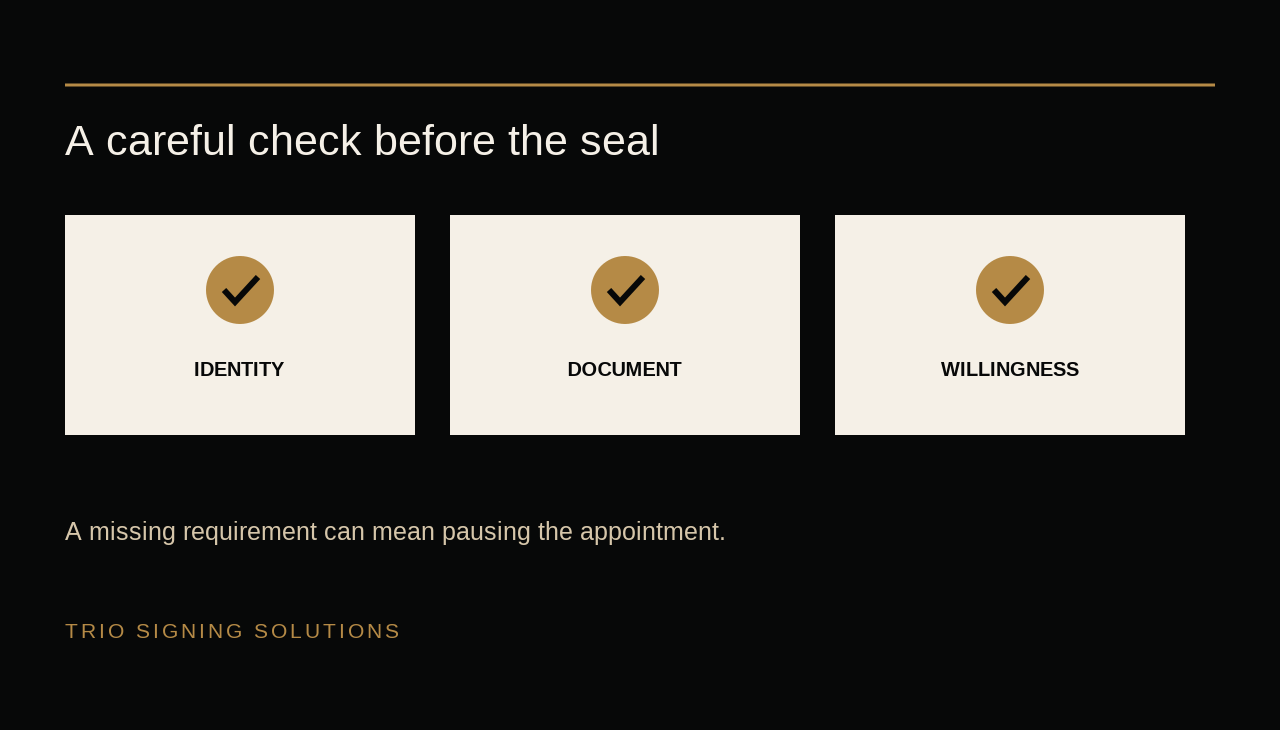
Notary Basics
Can a Notary Refuse to Notarize a Document? Common Reasons Explained
Understand notary requirements and common reasons a notary refuses notarization, from missing ID to incomplete documents and concerns about consent.
Read the guide →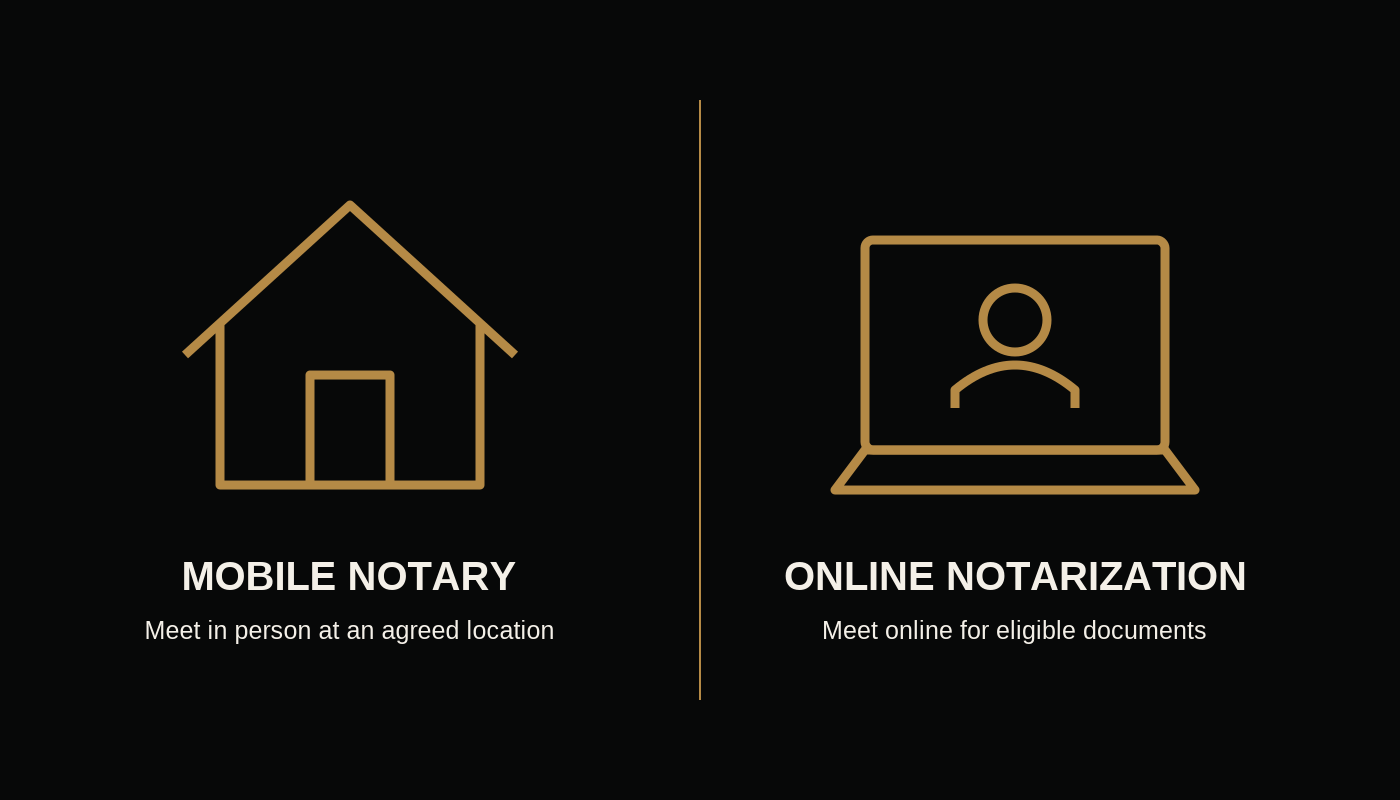
Notary Basics
Need a Notary? Mobile Notary and Remote Online Notarization Services Made Easy
Need a mobile notary or remote online notarization? Trio Signing Solutions offers professional, bilingual notary and signing services. Contact us today.
Read the guide →