
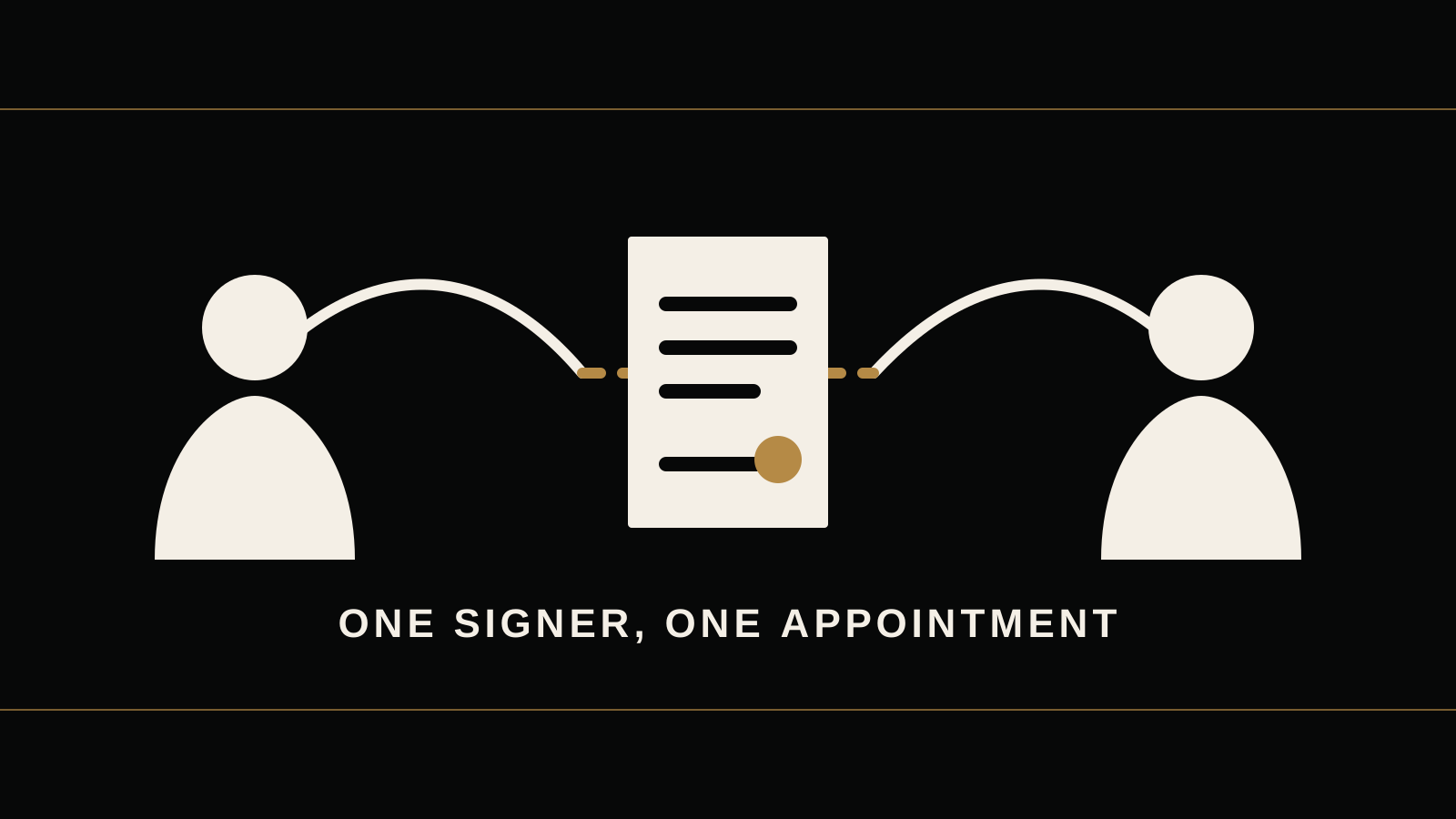
Usually, no. The key person for a notarial act is the signer whose signature is being notarized. That signer must personally appear before the notary for the act. But a buyer, seller, spouse, business partner, or other party to the same document does not always have to sit beside them at the same appointment. Multiple signatures can often be notarized separately, as long as the document, the recipient, and the rules that apply allow it.
That simple answer has important limits. Some documents require witnesses, a particular signing order, or everyone to be present at once. A lender, title company, court, government agency, or attorney may also have instructions that go beyond the basic notarial step. Before scheduling, confirm what the recipient needs. This guide explains the common process, but it is general information, not legal advice.
Focus first on the signer in front of the notary
A notary does not notarize a transaction as a whole. The notary performs a specific act for a specific person. In a typical acknowledgment, the notary identifies the person who appears and receives that person's confirmation that the signature is theirs and was made willingly. In a jurat, the notary administers an oath or affirmation and observes the signer complete the required signing step.
That is why an absent person cannot be covered by someone else's appointment. The Florida notary certificate requirements, for example, identify the person who appeared and the type of act performed. Florida also prohibits notarizing a signature when the signer is not present for the notarization. Review the state’s certificate requirements and prohibited-act rules for the details that apply to Florida appointments.
When parties can use separate appointments
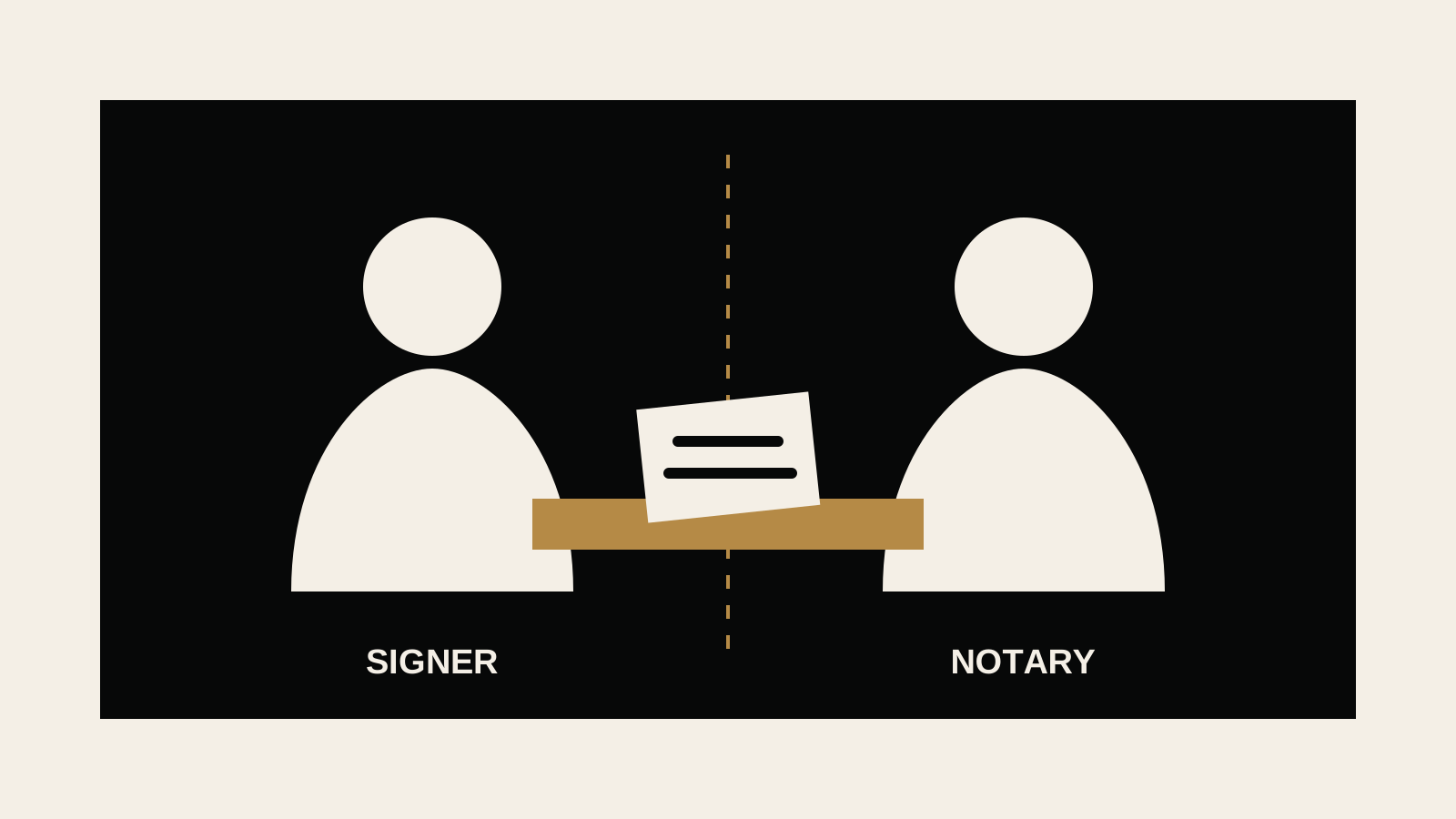
Separate appointments are often practical when signers live in different cities, have conflicting schedules, or cannot travel together. A common example is a document signed by two people who each need their own signature notarized. If the recipient permits it, one signer can appear before a notary, then the other signer can appear before the same or a different properly commissioned notary at another time.
Each notary completes a certificate for the person who appears before them. The certificate should reflect the real location, date, act, and signer for that appointment. It should never be backdated or written as though a person was present when they were not. The National Notary Association’s guidance for signers in different locations describes this same practical approach: each person can have their own appearance and certificate completed where they are.
Separate notarizations do not automatically make every document acceptable. A mortgage package, a deed, estate document, court filing, vehicle title, or business agreement may come with its own instructions. Some packages contain separate certificate blocks. Others require every signer, witness, or representative to be gathered in a particular sequence. The person or organization receiving the document is the right source for that answer.
When everyone may need to be there together
Do not treat separate appointments as a default rule. The document may require people to sign together, or witnesses may need to observe the same signing event. Certain estate documents, healthcare documents, real-estate documents, and forms prepared for a specific agency can have additional formalities. A transaction may also involve a representative, attorney in fact, trustee, or corporate officer whose authority needs to be shown in a particular way.
Witnesses are a frequent source of confusion. A witness is not automatically interchangeable with a notary, and a notary is not automatically an appropriate witness. The number of witnesses, whether they must be disinterested, and whether they must be present at the same time depend on the document and the applicable law. Ask the recipient before the appointment, then bring the people it requires.
If the document says that all parties must sign before it can be delivered, that is a document requirement, not a shortcut the notary can waive. Similarly, if a closing agent gives an order of signing, follow it. A notary can perform the requested act for an eligible signer, but cannot decide that a missing party, witness, or document instruction no longer matters.
Acknowledgments, jurats, and the timing of signatures
Knowing the notarial act helps people plan without guessing. An acknowledgment generally centers on a signer’s declaration that a signature is theirs and was made voluntarily. Depending on the document and jurisdiction, the signer may have signed before meeting the notary, then personally appear to acknowledge that signature. A jurat is different. It generally involves an oath or affirmation and signing in the notary’s presence.
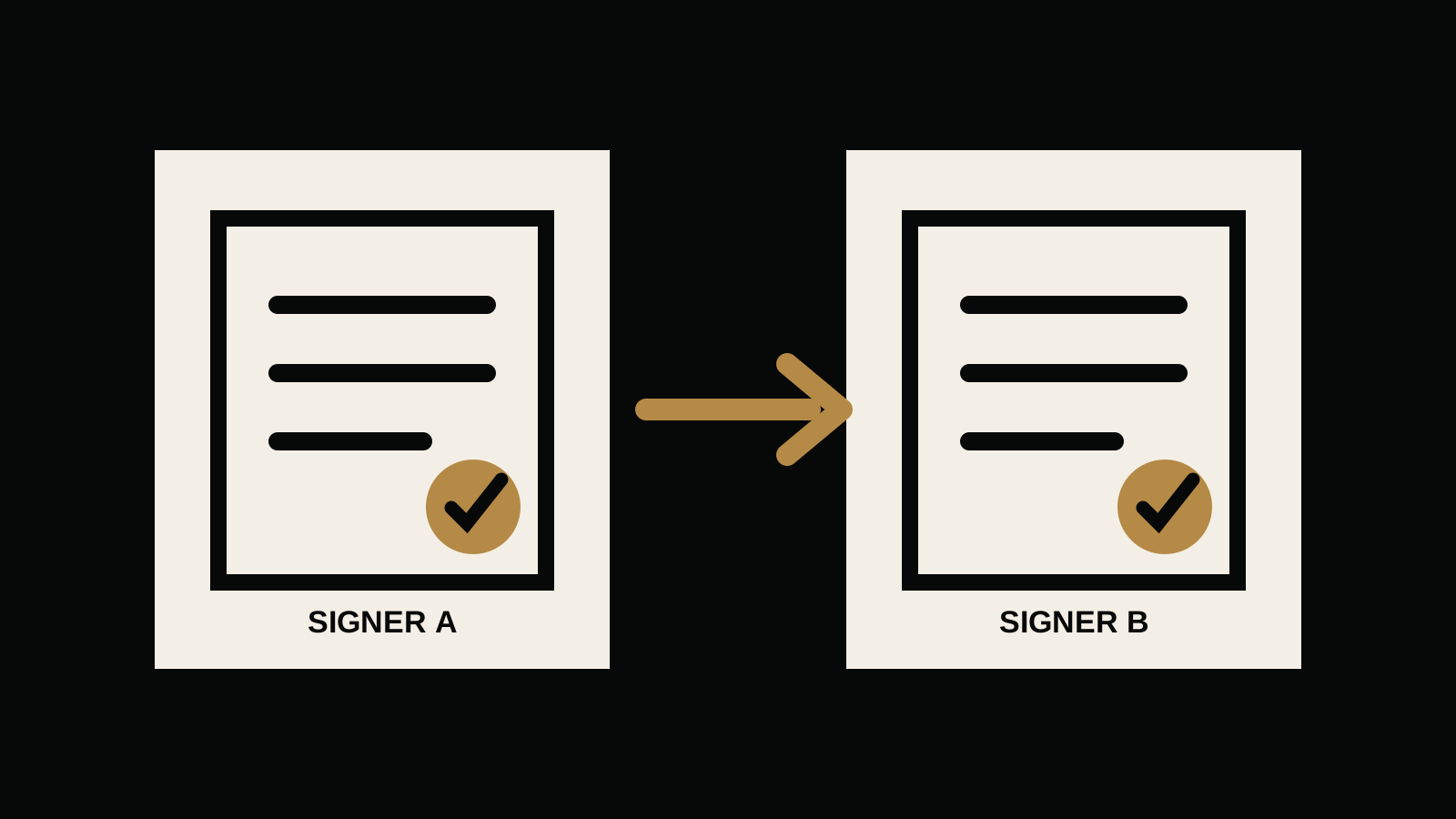
For a document with several signers, that can mean each person follows the required sequence at their own appointment. It does not mean one person's completed acknowledgment can stand in for another person's appearance. If the certificate wording is unclear, pause before anyone signs. Ask the recipient, document preparer, or a qualified attorney what the form requires. Trio’s guide to jurats and acknowledgments explains the distinction, while the guide to documents already signed covers the next step when someone signed before noticing the notary block.
What each signer should bring
Each appointment is easier when the signer has the full packet and their own identification ready. A notary should be able to see the document in its complete form, including pages and attachments that belong with it. Do not remove pages, fill in legal terms at the table, or ask the notary to decide how a blank certificate should read. If something is incomplete or uncertain, get instructions from the recipient first.
- The complete document package. Include all pages, exhibits, schedules, and instruction sheets. Keep any replacement copy clean and unsigned until the required sequence is clear.
- Current identification for each signer. Each person whose signature will be notarized needs to satisfy the identification requirement for their own act.
- Recipient instructions. Keep written directions about witnesses, signing order, certificates, remote acceptance, and where the document must go next.
- The required people. Confirm whether signers, witnesses, representatives, or interpreters need to attend and whether they must be present together.

Can multiple signers use remote online notarization?
Eligible remote online notarization can allow personal appearance through authorized live audio-video technology. It may help when a signer cannot reach the same location, but it does not erase the document's requirements. Every signer still needs to complete the required identity and appearance process. The document recipient must also accept remote notarization, and the signer, notary, and document must be eligible under the rules that apply.
Do not rely on an informal video call, a scanned ID, or one person joining a call for another person. Those steps do not replace an authorized process. Remote sessions can also be affected by identity verification, technology, witness rules, and the location of the notary. Confirm eligibility and acceptance before choosing an online appointment. For documents better handled in person, a mobile appointment can make it easier to gather the right people in a calm, private setting.
Do not confuse the parties with the signers
People often use “both parties” when they mean different things. A party may be a buyer and seller, a lender and borrower, a company and a customer, or two people named in a contract. Not every party necessarily signs the same page, and not every signature necessarily needs notarization. The document tells you which signatures require a notarial certificate. The recipient’s instructions tell you whether those signatures must be completed in a certain order or at the same time.
For example, a document can name two people but require only one person’s notarized signature. In that situation, only the named signer has a notarial appearance to complete. In another document, both people may have their own certificate blocks. They may be able to complete those blocks separately, but each person still has to appear for their own act. In a third situation, witnesses may be required even though they are not parties to the transaction at all.
This distinction helps when arranging an appointment. Instead of asking only whether “both parties” need to attend, ask four concrete questions: Which signatures must be notarized? Who must witness? Does anyone need to attend at the same time? Does the recipient require an order of signing? A clear answer before scheduling is much more reliable than trying to interpret a signature page once everyone is gathered.
Common situations and the safest next step
A buyer and seller are in different cities. Ask the title company, dealer, or other recipient whether each person may sign before a local notary. Confirm whether the packet has separate certificate blocks and how the signed originals should be returned.
Two spouses need to sign a document. Do not assume both spouses must attend one appointment. Check the document’s instructions and any witness requirements. If separate appearances are allowed, schedule each signer with the complete packet and their own identification.
One signer is ready and another is unavailable. Find out whether the transaction has a deadline, order of signing, or same-day requirement. If not, the available signer may be able to complete their own notarization first. Do not ask a notary to pre-complete a certificate for the absent person.
The document has witnesses. Ask exactly who may witness, how many people are needed, and whether the witnesses must be present for the signing. The answer can depend on the document's destination and applicable law.
The certificate wording is missing or confusing. Stop before anyone signs. The recipient or a qualified attorney can tell you which act the document needs. A notary cannot choose an act or provide legal advice simply to keep the appointment moving.
A five-minute coordination check
- Read the full instructions. Look beyond the signature line for notary blocks, witness lines, cover letters, and recipient directions.
- List every person who has a role. Separate signers, witnesses, representatives, and anyone who is merely receiving the document.
- Confirm whether appearances may be separate. Ask the recipient if each signer can use a separate notary or appointment.
- Verify timing and document flow. Confirm any order of signing, deadline, original-document requirement, and return instructions.
- Prepare each appointment. Make sure every signer has the full document, current identification, and a private place to complete the requested act.
For a broader preparation list, use Trio’s notary appointment checklist. It covers the routine details that can otherwise create a second appointment or a rejected packet.
How Trio can help coordinate the logistics
Trio Signing Solutions helps customers coordinate mobile and eligible remote online notarization appointments with care. When several people are involved, clear information about the document type, location, timing, required witnesses, and recipient instructions helps the team plan the right kind of appointment. The assigned notary still has to verify the requirements when meeting each signer.
Once you know what the document requires, review Trio’s signing services or request a signing. If you are unsure whether parties must sign together, get that answer from the receiving organization or a qualified attorney before scheduling. That one check can prevent a document from being delayed after everyone has already arrived.
Frequently asked questions
Do both people have to be present to notarize a document?
Usually, no. The person whose signature is being notarized must appear for that notarial act, but the other party to a transaction does not always need to be there at the same time. The document, its instructions, applicable law, and the receiving party's requirements control.
Can two signers use different notaries?
Often, yes. When the document permits separate notarizations, each signer can appear before a properly commissioned notary for their own signature and certificate. Confirm the document recipient's instructions before arranging separate appointments.
Does every signer need to show identification?
Each person whose signature is being notarized needs to satisfy the identification rules that apply to their own appointment. One signer's ID does not establish another signer's identity.
Can one signer bring a document for an absent person?
No. A person cannot bring an absent signer's signature to a notary for a routine notarization. The signer must personally appear for the requested act, either in person or through an authorized remote process when eligible.
Related posts

Notary Basics
Does a Notary Have to Witness Your Signature?
Learn when a notary must see you sign, when an earlier signature may be acknowledged, and which questions to ask before your appointment.
Read the guide →
Notary Basics
Jurat vs. Acknowledgment: What’s the Difference?
Understand the practical difference between a jurat and an acknowledgment before a notary appointment, including when to sign and when an oath is involved.
Read the guide →
Notary Basics
Can a Notary Notarize a Document Already Signed?
Already signed a document? Learn when a notary can complete an acknowledgment, when you must re-sign for a jurat, and what to bring.
Read the guide →